Research Engagement and motivation
Limitless
What people want from work, what they actually get, and how leaders close the gap
Disengagement, turnover, and wasted potential are what it costs to run people on a definition of success that stopped motivating them years ago. Laura’s seven-year global study shows what actually keeps people engaged, and it isn’t status or pay.
- ~10,000
- responses to the Limitless Assessment
- 113
- countries, across every demographic and industry
- 7
- years of workforce engagement research
- 4
- pillars of consonance: calling, connection, contribution, and control
Disengagement is the most expensive problem, and we keep measuring it with an outdated scorecard.
For twenty years, Laura was a retained executive recruiter. Her job was to call wildly successful people and convince them to go to work for her clients. She called because they were successful, but despite all that success, they weren’t very happy. So they all called her back.
As a recruiter, she listened for the scorecard everyone uses: inspiration, mission, challenge, impact, skills, prestige, location, and money. Those eight factors capture the value of a job. They say nothing about the value of a job to a particular person, and the data show that’s the only thing that actually moves anyone.
Miss any one of the four C’s, and you don’t have a satisfied employee. You have a resignation that hasn’t been written yet.
Inspiration, mission, challenge, impact, skills, prestige, location, and money.
The eight factors everyone uses to judge a job. They capture what a job is worth, but not what it’s worth to the person doing it.
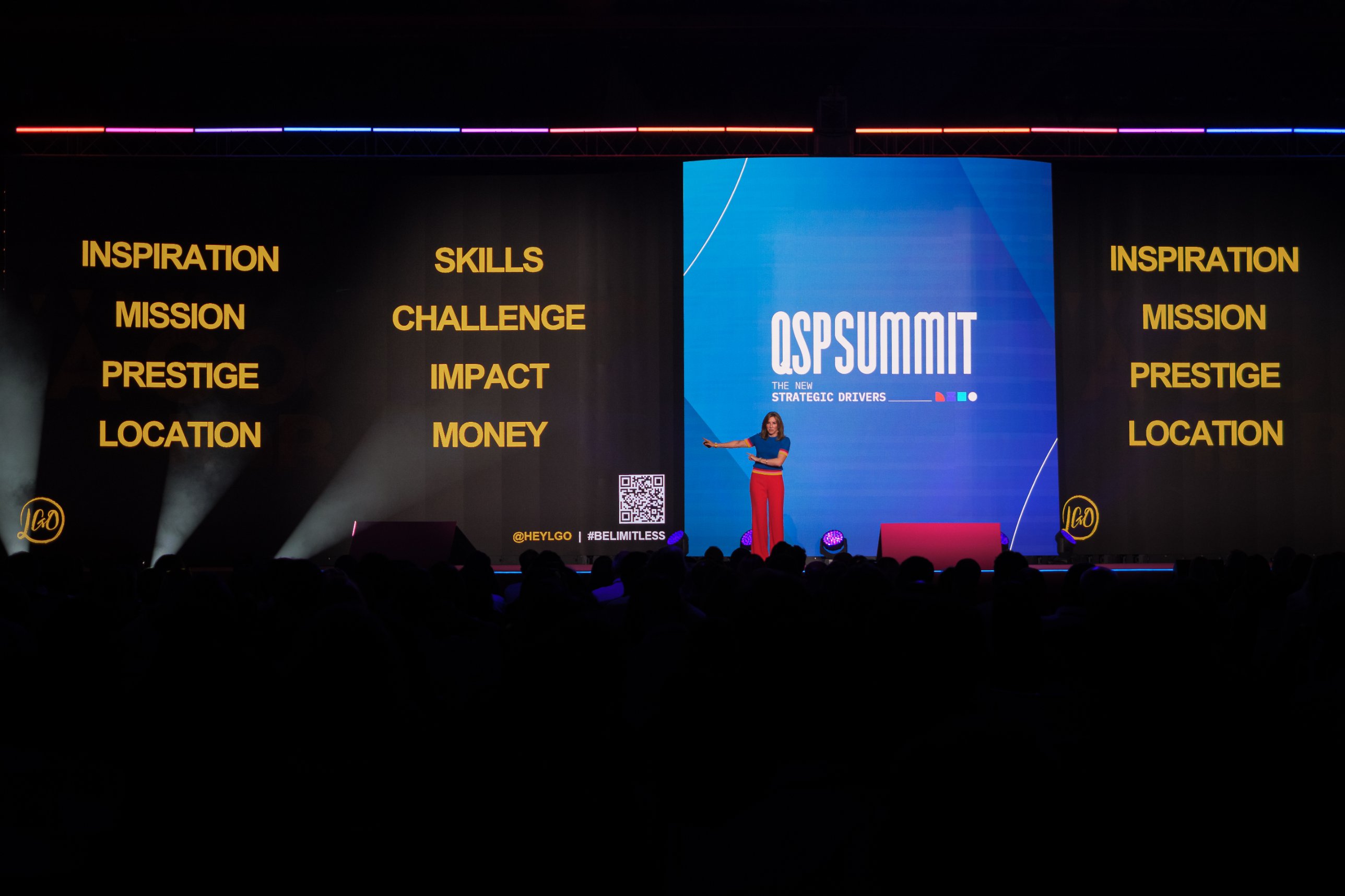
Success doesn’t build engagement. Consonance does.
Consonance is the alignment between what you do and who you are. When it’s there, people walk through fire. When it’s missing, even outwardly successful people quietly disengage and start taking recruiters’ calls. Across nearly 10,000 people, the gap between what they want from work and what they get is wide.
Purpose
29-point gap
47.8% Feel their company’s mission aligns with their own
77.2% Say work should give their life purpose
Something bigger
50-point gap
36.9% Feel their work gives deeper meaning to their community and values
86.7% Need work to involve something bigger than themselves
Identity
42-point gap
43.4% Feel they’re the best version of themselves at work
85.4% Want work to represent who they are
Consonance in one continuous loop.
Consonance rests on four pillars, and they aren’t a checklist. Each one feeds the next: a calling makes the work matter, work that matters gives back, what it gives back earns you more say, and that agency frees you to follow your calling further. Strengthen one, and the others follow. Neglect one, and the whole loop slows.
Calling
Am I inspired by the work?
Connection
Does my work matter?

Contribution
What does work give to me?
Control
Do I have any agency at all?
It’s not enough to be a good leader.
53%
do their best work when the relationship with their leader is real.
21%
do when the leader is capable, but there’s no real relationship.
“There are a million miles between being loved and being seen.”
What predicts whether your best people stay isn’t how good you look as a boss. It’s whether they feel known. So what makes people feel they have a real relationship with their leader?
- They feel known.The leader understands what brings them to life, not just what’s in their job description.
- They have a real say.Their opinion actually shapes the decisions that affect them.
- They can reach for growth.They’re free to seek feedback and mentoring from many sources.
- They see why it matters.There’s a clear line of sight from their daily work to the bigger picture.
Engagement starts with meaning making.
Four moves, one for each C. Make them for yourself, and then for the people you lead. The same four boxes that decide whether you thrive decide whether your people stay.
Calling
For you
Write your own scorecard.
Decide which factors actually matter to you now, not the ones handed to you at seventeen.
For your team
Start with calling.
Allow for broad definitions of inspiration: building a business, serving a leader, solving a problem, or raising a family.
Connection
For you
Put yourself where your work matters.
Seek the work and the rooms where the best of you is called on, and stop auditioning where it isn’t.
For your team
Make your people the hero.
Trade “How can I help?” for “What needs to happen?” so they’re the one who acts and matters. Get close to the work, not above it.
Contribution
For you
Define what “enough” means to you.
Name how you want work to enrich your life beyond the paycheck, and measure against that.
For your team
Ask what moves them.
Learn what each person wants work to contribute to their life, whether money, status, flexibility, or more, and measure against that.
Control
For you
Trade limitations for invitations.
Every limit someone placed on you is an invitation to stop letting them hold the scorecard. Claim the say you can.
For your team
Give your people a say.
Hand over real influence over the metrics and decisions that affect them. Agency is a function of trust; trust is a function of sightlines.
Invitations, not limitations.
The work is making meaning, for yourself and for everyone you lead.

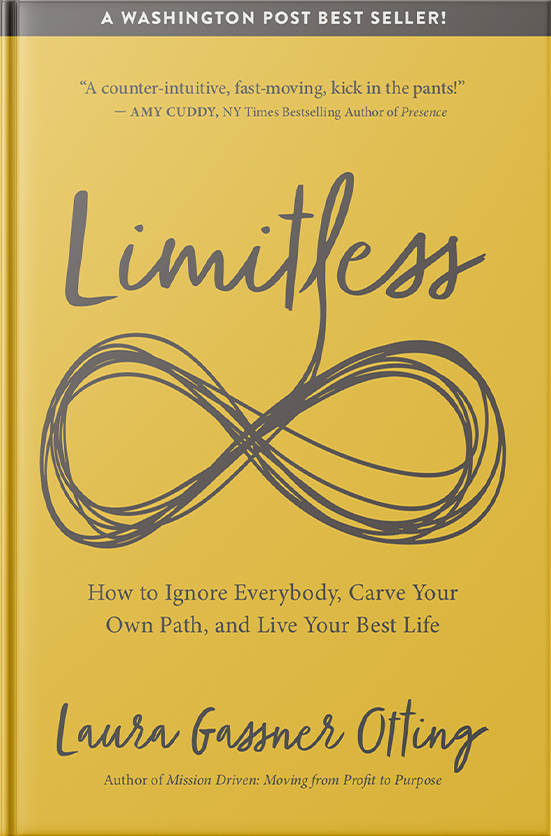
The book
Limitless

How to ignore everybody, carve your own path, and live your best life
Where this research began. Laura shows why chasing someone else’s definition of success leaves us stuck, and how to close the gap between what you want from work and what you actually get.
- Washington Post bestseller
- One of Good Morning America’s Favorite Books of the Year
- Read in seven languages
Go further.
The diagnostic
The Limitless Assessment
Measure the gap between what you want from work and what your work provides, for you or your whole team.
The report
The Limitless Leader
The full data on consonance and the four C’s, from 10,000 people in 113 countries.

Book club
Read It Together
A discussion guide for book clubs and leadership teams reading Limitless together.

The keynote
The Limitless Leader
What drives engagement for every member of your team, customized for your audience.
Your best people are deciding right now whether to stay. Give them a reason.
Bring this research to your leaders as a keynote, a half-day working session, or with your own organization’s data, or work with Laura one-on-one through advisory. You’ll hear back the same business day. Bureaus welcome.