
The Problem
We are habituated only to see past performance.
At the height of World War II, the most glamorous woman in Hollywood walked into a room of Navy brass with a breakthrough that could stop the enemy from jamming Allied torpedoes. The room saw a pretty face and sent her away. Her name was Hedy Lamarr — and the "frequency hopping" they waved off became the backbone of WiFi, GPS, and Bluetooth. They were looking right at her. They just couldn't see her.
We've been taught to look for greatness in the obvious — fancy degrees, impressive résumés, big titles, familiar faces. We tell ourselves we'll know it when we see it. But if you'll know it when you see it, you've already seen it before — and if you only back what you've seen before, you stay constrained to where you've been.
For two decades of executive search, interviewing thousands of candidates for the most consequential roles, one lesson held: greatness rarely looks like what we expect. The question isn't how to go find it. It's how to see it in the people already in front of you — and how many Hedy Lamarrs are sitting in your organization right now, waiting to be seen.
At the height of World War II, the most glamorous woman in Hollywood walked into a room of Navy brass with a breakthrough that could stop the enemy from jamming Allied torpedoes. The room saw a pretty face and sent her away. Her name was Hedy Lamarr — and the "frequency hopping" they waved off became the backbone of WiFi, GPS, and Bluetooth. They were looking right at her. They just couldn't see her.
We've been taught to look for greatness in the obvious — fancy degrees, impressive résumés, big titles, familiar faces. We tell ourselves we'll know it when we see it. But if you'll know it when you see it, you've already seen it before — and if you only back what you've seen before, you stay constrained to where you've been.
For two decades of executive search, interviewing thousands of candidates for the most consequential roles, one lesson held: greatness rarely looks like what we expect. The question isn't how to go find it. It's how to see it in the people already in front of you — and how many Hedy Lamarrs are sitting in your organization right now, waiting to be seen.

The Big Idea
Our intuition can spot future potential.
For two decades, my job was to spot the talent others missed — a retained executive recruiter reading thousands of candidates for the most consequential roles in the country. That practitioner's instinct became a research question. In my doctoral work, The Role of Intuition in the Hiring Process, I've interviewed the CEOs, CHROs, and executive recruiters whose careers depend on reading talent — and used grounded theory to map how their intuition actually works.
The finding: it isn't a magic trick. It's a sensemaking process — one that can be made both defensible and teachable. The best talent spotters don't choose between gut and evidence; they blend intuitive pattern recognition with disciplined judgment, moving past "I'll know it when I see it" to a practice they can repeat and pass on. Across the interviews, that practice resolves into an iterative cycle:
Intuition isn't a flash. It's a cycle you can teach.
Embodiment feeling signals · Patterning recognising data points · Trust Calibration deciding yes or no · Social Validation making intuition defensible · Error Learning feedback and recalibration
Key Findings
Legendary talent spotters look for things other miss.
Five patterns are emerging from the grounded-theory interviews with the people who spot talent for a living.
A feeling before a thought
Evaluators register a pull toward a candidate before they can explain it. The body reads the pattern before the mind can name it.
Read the system, not just the person
Intuition is strongest when the evaluator deeply understands the culture the candidate will land in — and weakest when they don't.
Charisma creates false positives
The most common way good evaluators get fooled: mistaking polish and presence for potential.
Intuition is not bias
Experts insist they differ: intuition is subconscious, emergent, hard to name; bias is immediate, visual, and surface-level.
More teachable than anyone admits
Evaluators first say intuition can't be taught — then describe building it through reflection, pattern exposure, and honest review of their misses.
This is active doctoral research — qualitative findings from interviews now, with quantitative validation to come.
The Practice
Three key shifts you can make today.
Change your lens
Evaluate people by where they could go, not only where they've been.
Change their story
Help them rewrite who they believe they are — and which strengths they've been hiding.
Change the stakes
Give real stretch: assignments, decisions, and roles that let them rise.
Greatness isn't something you hire. It's something you hone.

The Framework
Greatness lives in the alchemy of everyday heroes, not the rock stars.
We chase rock stars — the high achiever, the agile learner, the team energizer — and each shines on one thing while going blind elsewhere. But underneath nearly every "two-trick pony" are nine behaviors that predict who can grow:
High Achievers
Hunger · Volition · Tenacity
Agile Learners
Plasticity · Agility · Curiosity
Team Energizers
Wonder · Weight · Empathy
Where the families overlap, latent talent becomes leadership: hunger + inspiration makes a Catalyst; hunger + adaptability makes an Innovator; inspiration + adaptability makes a Mentor.
"Greatness doesn't live in the rock stars. It lives in the alchemy of everything in between."
Watch
Spotting potential in action
A closer look at how leaders recognize the patterns that predict potential — and who to back, promote, and bet on.
The Solution
Putting the research to work.
THE REPORT
The Limitless Leader Report
The data behind why your best people stay — and why they leave.
Get the ReportTHE BOOK
Greatness
The book on spotting and stoking the potential already on your team — coming soon.
Learn MoreADVISORY
Executive Coaching
Build the muscle of spotting and stoking potential across your team.
ExploreTHE KEYNOTE
Spotting and Stoking Greatness
"How to build the team you need from the team you have" — a research-backed keynote on seeing and stoking hidden potential.
About
Meet Laura Gassner Otting
Laura Gassner Otting is a Wall Street Journal and Washington Post bestselling author, researcher, and keynote speaker who helps individuals, leaders, and organizations become limitless. A former White House appointee who helped build AmeriCorps, she spent two decades leading executive searches before turning to the research behind engagement, ambition, and potential.
Her TEDx talk has been viewed millions of times, and her work has been featured by Good Morning America, the TODAY show, Harvard Business Review, Forbes, and more.
Meet Laura Contact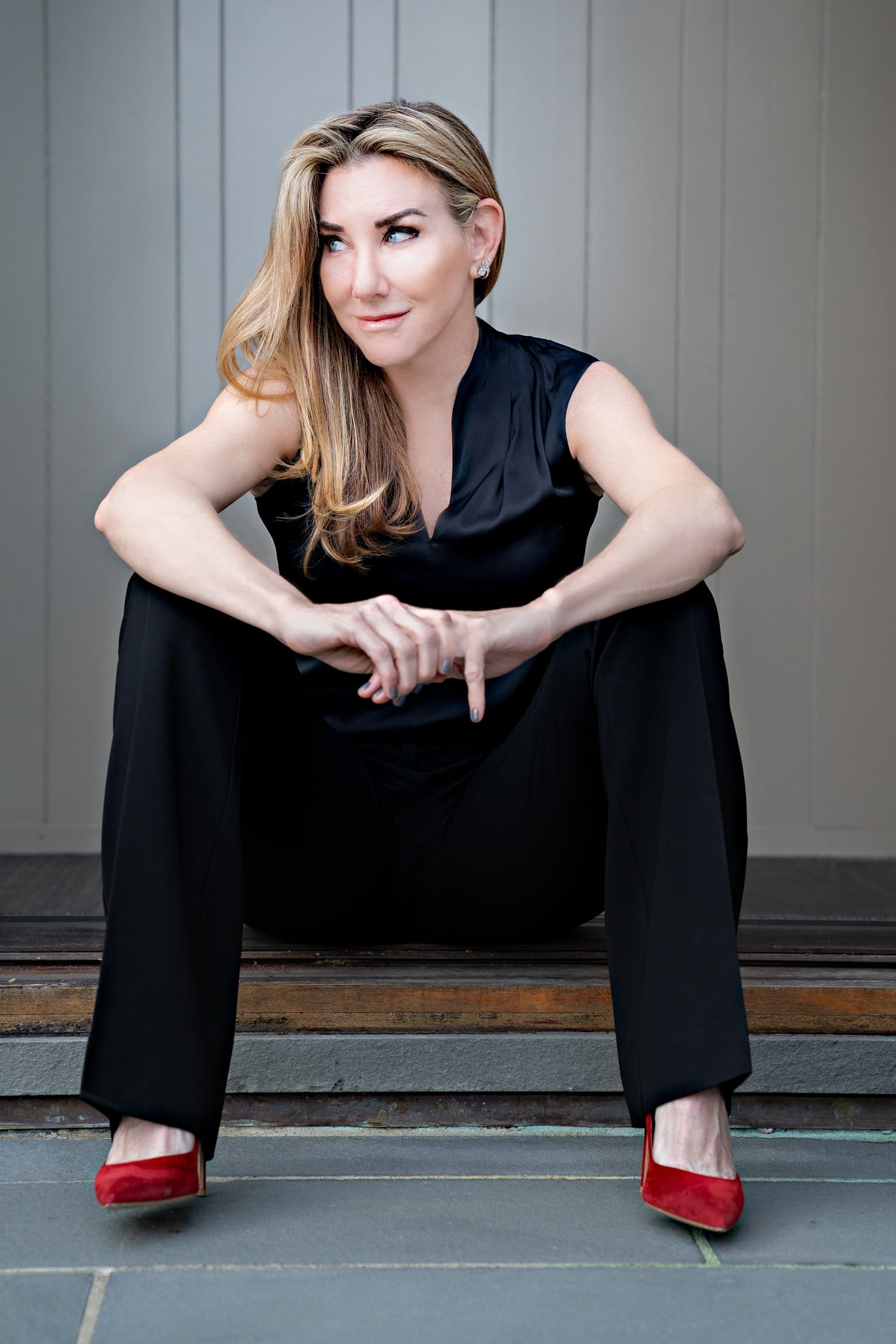
Hello Truesday
Join 25,000 other readers.
Each week Laura sends real-time, real-life insights with truths from her research.
Join Hello Truesday