
“The moment your people succeed is also the moment they’re most likely to struggle.”
Let’s start with that paradox.
You push your team to stretch, they hit the target, and instead of basking in confidence and getting excited for the next challenge… they flinch.
Why, in the wake of success, are they slowing down, stepping aside, leaning back? It’s not because they don’t care. It’s because the success they’ve had introduced them to a potential they didn’t know existed inside of them, and suddenly, they don’t feel safe.
Success shows us a bigger version of ourselves and then demands we live up to it. They question whether they can do it again, and if they can do even more. It’s uncharted, unfamiliar, unknown. Simply put: they feel the pressure of their own potential.
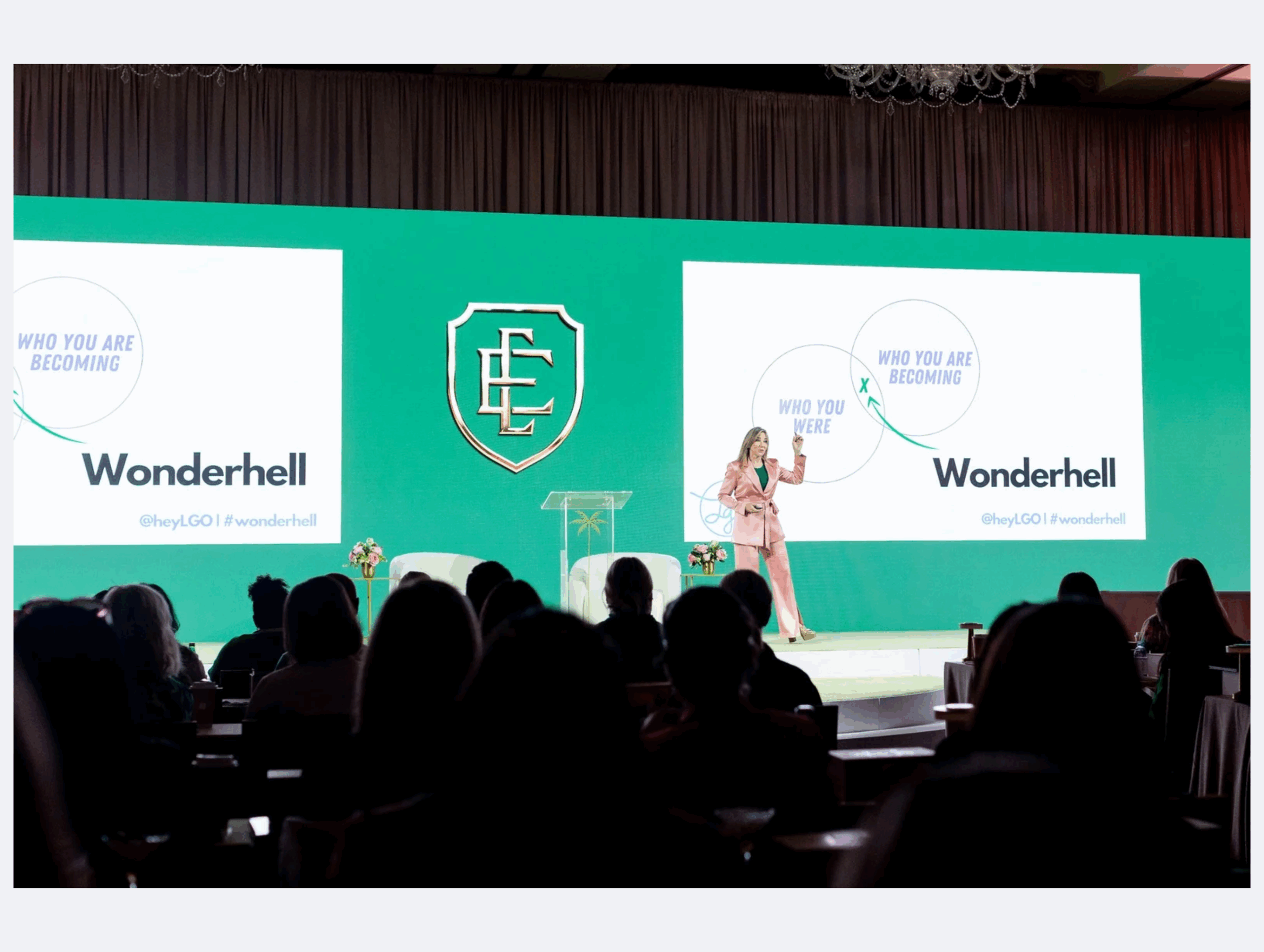
The success has been wonderful. But the emotions that accompany this realization that they can be more? Well, that’s kind of hell. That’s the space I call Wonderhell: the messy middle between who you were and who you’ve just realized you could become.
And when your top performers land there, they don’t need rescuing. They need reframing.
The Science of the Stretch
Economist Steven Leavitt’s 2016 “Heads or Tails” study offered a strange experiment: he asked thousands of people stuck in analysis paralysis to make a major life decision – leave a job, start a company, move cities – based on a coin flip. Heads: go for it. Tails: don’t change a thing.
Six months later, he found that those who made the change were substantially happier than those who stayed put. Why? Because stagnation feels safe in the moment, but corrodes satisfaction and growth long term. That tension, between safety and stretch, is what your high performers feel every time they level up.
We are wired to overvalue stability and undervalue possibility.
This tension is fueled by impostor syndrome, something 70% of us have experienced: the fear that success is accidental and failure is surely right around the corner. But decades of follow-up research show that impostor thoughts aren’t evidence of fraudulence; they’re evidence of learning. They appear precisely when capability is expanding faster than confidence.
In other words, Wonderhell is proof of progress.
What Leaders Often Misread
When a high achiever starts doubting themselves, most leaders reach for reassurance: “You’ve got this.”
But, reassurance only calms symptoms; it doesn’t build skill.
Three strands of behavioral science explain why the better move is interpretation, not insulation:
- Identity drives behavior.
A 2015 study in Nicotine & Tobacco Research found that people who said “I am a smoker” were more likely to relapse than those who said “I smoke.” Identity cements habit. The same is true of success: if your people still see themselves as “trying to lead” instead of “leaders,” they’ll keep playing small. - Perfectionism limits innovation.
We know from experience that the more we chase flawlessness, the less we risk novelty. High performers who equate perfection with value stop experimenting precisely when curiosity matters most. - Autonomy sustains engagement.
In my own Global Limitless Leader Research — from nearly 10,000 professionals across 113 countries from every possible demographic and every possible industry — those who reported high control over how, when, and where they worked also reported the highest levels of creativity, learning, and motivation. Those with low control were more likely to be tired, cynical, and stuck.
Discomfort isn’t the enemy. Disempowerment is.
The Wonderhell Framework for Leaders
In creating the Wonderhell Framework, I spoke to more than 100 glass ceiling shatterers, Olympic medalists, start-up unicorns, CEOs, creatives, philanthropists, activists, artists, and every day people like me and you, all to figure out how they survived these moments. I learned that they not only survived them, but thrived in them instead.
They didn’t extinguish pressure; they taught their people how to harness it. Here’s how:
1. Embrace Their Ambition
Ambition untethered burns out. Ambition aligned builds leaders.
When a high performer reaches a new level and wobbles, don’t tell them to slow down. Ask:
“What does this new level make possible for you — and for us?”
Forget that old idea that “if you can name it, you can tame it.” Instead, great leaders know that “if you can name it, you can claim it.” Ambition isn’t arrogance; it’s awareness. It’s the realization that “I’m capable of more.”
Your job isn’t to calm the fire. It’s to give it direction.
Help them shift their thinking from “I haven’t done this before” to “I haven’t done this before.” That simple shift in where we place the emphasis on the words in the sentence is all it takes to shift Wonderhell from a limitation to an invitation. The former is stress and risk and certain failure, while the latter is innovation and opportunity and growth.
2. Renegotiate Their Relationship with the Emotions
Emotions after achievement – anxiety, doubt, restlessness – aren’t red flags. They’re readouts.
They indicate that growth is underway.
Encourage your team to treat emotion as information. Ask what each feeling is teaching them. Connect their stress to purpose. Show them that intensity and importance often arrive in the same package. Allow them to pause, and listen, and understand these emotions to separate signal from noise, and create learning loops from future growth.
Pressure is proof that something meaningful is happening.
And remember: the data is clear. People who have autonomy interpret stress as challenge; those without it interpret stress as threat. Give them control of process, not just output.
3. Help Them Get Comfortable Being Uncomfortable
Every breakthrough lives on the edge of uncertainty. Your goal is not to remove the edge, it’s to make standing there normal. Because what’s on the other side of this success? We hope the next one, and the next one, and the next one after that.
So, the goal should never be to just get through this contract, this launch, this goal. Or, you’ll end up right back where you started, trying to motivate them to grow.
Growth never feels graceful in real time. That’s how you know it’s working.
Instead, talk openly about the learning curve. Reward iteration. Model curiosity. Admit when you don’t know yet. When discomfort is expected, not feared, it stops draining energy and starts creating it. And, keep in mind that this means – for all of you – living with a beginner’s mindset and constantly re-evaluating how this next big potential demands you spend your precious time.
From Pressure to Potential
Success will always feel a little weird. You’ve never been here before. That’s the cost—and the privilege—of progress.
Leaders who understand that don’t rush to make things easier. They make them meaningful. They build teams fluent in growth: ambitious enough to stretch, emotionally intelligent enough to interpret, and resilient enough to stay in the heat without melting.
Because pressure isn’t a problem to solve. It’s potential demanding your attention.
Bring Wonderhell to Your Organization
My Wonderhell Keynote helps leaders and high performers do exactly this – turn pressure into potential – drawing from behavioral science, organizational psychology, and interviews with over 100 glass ceiling shatterers, Olympic medalists, start-up unicorns, CEOs, creatives, philanthropists, activists, artists, and every day people like me and you and your audience.
Allow me to introduce your people to everything they can be. Because once they see it, they can’t back away. That’s where real change begins.
The research behind this
This builds on Laura’s research into ambition and Wonderhell — the emotional cost of success. Go deeper on the research, or bring it to your team with the keynote Limitless Growth.
Frequently asked questions
How do you keep high performers from burning out?
Help them read the doubt and pressure that come with success not as a sign they’ve peaked, but as the tax on growth — then protect their energy so the climb stays sustainable.